
The NCAA Just Changed Eligibility Forever. Here's Why We've Been Preparing for This Moment for Years.


The NCAA approved one of the most significant eligibility changes in modern college sports history this week, and while most media coverage has focused on redshirts, roster management, NIL, and recruiting implications, I think most parents are asking a much simpler question:
What does this mean for my athlete?
The answer may surprise you.
For many athletes training at Stadium Performance, it may not change much at all.
Not because the rule is insignificant. It absolutely is. In fact, I believe this decision will reshape college athletics over the next decade. But from a development standpoint, this is exactly where college sports have been heading for years. The NCAA simply made it official.
Long before this announcement, college athletics was already moving toward a system that rewards athletes who can contribute earlier, adapt faster, and arrive physically prepared. The transfer portal accelerated roster turnover. NIL created new incentives. COVID eligibility waivers created roster logjams. Coaches became increasingly reluctant to wait multiple years for athletes to develop physically. The traditional luxury of arriving on campus and slowly growing into your body became less predictable every season.
At Stadium Performance, we've been preparing athletes for that reality long before the NCAA voted on it.
What Actually Changed?
Under the new rule, athletes will have five years of eligibility that must be completed within five years of high school graduation or age 19, whichever comes first. In practical terms, the traditional redshirt model that has existed for decades is largely disappearing.
Historically, athletes had five calendar years to compete in four seasons. Many used that extra year to gain strength, improve movement quality, recover from injury, or simply mature physically before stepping into a significant role.
For football players, particularly offensive and defensive linemen, redshirting became an accepted part of development. Quarterbacks often benefited from additional time learning offensive systems. Basketball players used it to build strength. Athletes in nearly every sport viewed that extra year as a developmental safety net.
That safety net is becoming much smaller.
The NCAA's goal is understandable. Between COVID waivers, medical exemptions, transfer portal movement, and ongoing litigation, eligibility became increasingly difficult to manage. Some athletes were effectively remaining in college athletics for six, seven, or even eight years. The NCAA wanted a cleaner system with fewer exceptions and fewer legal challenges.
From an administrative perspective, the move makes sense.
From a development perspective, however, it creates some very interesting questions.
Why This Is Not Actually New
One of the biggest mistakes families can make is viewing this as a sudden change.
The truth is that college coaches have been telling us exactly where things were heading for years.
They want athletes who are physically prepared.
They want athletes who can handle workloads.
They want athletes who can stay healthy.
They want athletes who can contribute.
The best recruiters in the country are not simply evaluating talent anymore. They're evaluating readiness.
I have this conversation regularly with college coaches across multiple sports. The physical demands of college athletics continue to increase. Training loads are higher. Expectations are greater. Competition for playing time is relentless. Athletes who arrive behind physically often spend their first several years trying to catch up.
Sometimes they never do.
This is why our approach at Stadium Performance has always focused on long-term athletic development rather than short-term performance gains. We are not trying to create impressive freshmen. We are trying to build athletes who can thrive as sophomores, juniors, seniors, and beyond.
Ironically, that approach becomes even more valuable under the NCAA's new rules.
Why This Changes Less for Stadium Performance Athletes Than You Might Think
For years, I've told parents that one of the worst development plans an athlete can have is assuming college will fix everything.
College will not magically build strength you never developed.
College will not suddenly teach movement quality.
College will not erase years of poor recovery habits.
College will not correct biomechanics that have been ignored since middle school.
The athletes who succeed at the next level typically arrive with a foundation already in place.
That foundation includes strength.
It includes power.
It includes movement quality.
It includes durability.
It includes the ability to tolerate training volume and recover from it.
This is why our athlete assessments, sports performance training, strength and conditioning programs, speed and agility training, injury prevention systems, and return to play protocols are all built around preparing athletes for future demands rather than current demands.
The new NCAA rule simply reinforces what we've already believed. Preparation matters more than projection.
The Conversation Nobody Wants to Have
One overlooked consequence of this decision involves a trend that has become increasingly common throughout youth sports.
For years, many families have intentionally held children back academically to create athletic advantages later in adolescence. The logic is straightforward. Older athletes are often larger, stronger, faster, and more mature than their peers.
Sometimes that strategy creates real advantages.
Under the NCAA's new age-based model, however, those decisions may carry unintended consequences. Depending on how eligibility is calculated and interpreted, some athletes could find themselves sacrificing future eligibility years because they were held back earlier in life.
I'm not suggesting that educational decisions should be made based solely on sports.
Far from it.
But I do think families need to understand that the landscape is changing. What once appeared to be an obvious competitive advantage may now require a much more nuanced conversation.
What Parents Should Focus On Instead
Whenever a major NCAA rule changes, parents naturally begin searching for ways to gain an edge.
That's understandable.
The problem is that most of the things parents worry about aren't actually the things that determine long-term success.
The athletes who thrive at the collegiate level usually share a remarkably similar profile.
They move well.
They are strong relative to their body weight.
They can produce force.
They can absorb force.
They stay healthy.
They recover effectively.
They are coachable.
They are resilient.
Notice what isn't on that list.
Recruiting rankings.
Social media followers.
Camp invitations.
Highlight videos.
Those things may help create opportunities, but they rarely determine who succeeds once the opportunity arrives.
Physical preparedness does.
NCAA Coaches May Adapt Faster Than Athletes
College coaches are likely to adapt to this rule very quickly.
Roster management becomes easier. Scholarship planning becomes more predictable. Eligibility timelines become more straightforward.
Athletes may take longer to adapt because the mindset has to change.
For decades, many athletes arrived on campus expecting a developmental runway. They assumed there would be time to learn how to train, learn how to recover, and learn how to prepare.
That assumption is becoming increasingly dangerous.
The athletes who separate themselves moving forward will likely be the athletes who arrive with those habits already established.
Not because coaches are becoming less patient. Because competition is becoming more intense.
The Bigger Lesson
Most people will read about the NCAA's new five-year rule and focus on what athletes may lose.
I think they're looking at the wrong thing. The real story isn't eligibility. The real story is preparation.
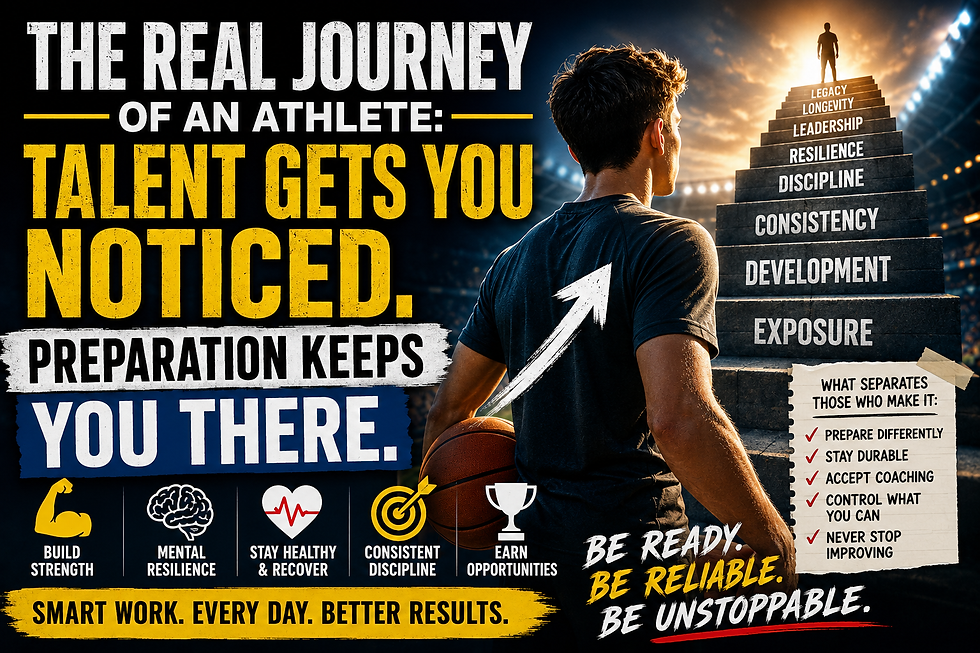
College athletics has been moving toward earlier readiness for years. This rule simply acknowledges that reality. The athletes who have invested in their physical development, movement quality, strength, recovery habits, and long-term athletic foundation will continue to thrive.
The athletes hoping for extra years to solve developmental deficiencies may find those opportunities harder to come by.
At Stadium Performance, that doesn't change our mission at all.
If anything, it validates it.
We've never trained athletes for where they are today. We've always trained them for where they're trying to go tomorrow.
And after this week's NCAA decision, that philosophy may be more important than ever.


Comments